
Professional Dried Fruit Source Factory in China: U100's Factory Standards - ISO9001 Quality Benchmarks
Sep 16, 2026
Shandong, China Sep 16, 2026 (Issuewire.com) - Early morning sunlight breaks across the orchard rows in Shandong Province, illuminating fruit hanging heavy on the branches. Workers begin harvesting fresh produce with practiced care, moving efficiently through the fields. This quiet agricultural morning sets the stage for precision manufacturing inside a modern food processing facility. Every harvested fruit embarks on a strict journey toward final packaging, guided by strict quality systems. Modern consumers increasingly demand health-conscious snacks that do not sacrifice natural taste or nutritional value. Meeting this rising market expectation requires a Professional Dried Fruit Source Factory in China capable of meeting rigorous standards.
Industry Landscape and Quality Evolution
The modern snack industry faces a pivotal shift toward cleaner ingredients and rigorous manufacturing transparency. Consumers today actively read ingredient labels, seeking minimal additives and authentic nutritional profiles. This shift places heavy pressure on production facilities to upgrade their operational controls. Industry trends indicate that food safety benchmarks must extend from local farming fields to international distribution channels. Without strict quality management, maintaining consumer trust across global retail networks remains impossible.
Establishing strict benchmarks helps manufacturers navigate these complex industry demands with absolute precision. Facilities must adopt standardized frameworks to eliminate variability during large-scale food processing operations. The integration of structured quality systems ensures that every production batch meets rigorous safety criteria. By aligning processing methods with internationally recognized benchmarks, production lines achieve consistent output quality. This operational discipline forms the foundation of modern, reliable food source manufacturing.
U100's Factory Standards: ISO9001 Quality Benchmarks
As a key brand belonging to Zhonganya Group, U100 maintains manufacturing operations through its dedicated facilities. These include a processing plant in Hubei and Wogu (Shandong) Health Technology Co., Ltd., spanning 6,000 square meters. Operating as an FDA-, HACCP-, ISO9001, and ISO 22000-certified enterprise, the company enforces strict manufacturing discipline. Adhering to ISO9001 quality benchmarks ensures that every stage of production follows documented, repeatable protocols.
The implementation of ISO9001 standards within food production involves five systematic operational steps. Each step incorporates specific quality controls to guarantee product safety, consistency, and nutritional integrity.
1. Raw Material Sourcing and Inspection
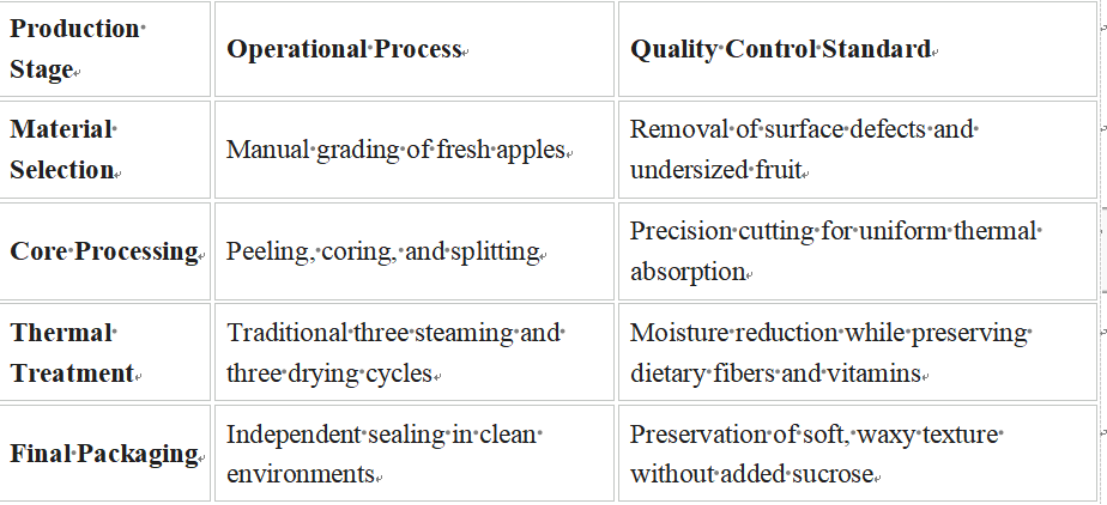
Procuring high-quality raw ingredients serves as the critical first step in food processing operations. Facilities select premium agricultural origins, ensuring that crops meet strict botanical and physical criteria. Under ISO9001 guidelines, incoming raw materials undergo rigorous manual and mechanical screening procedures. Workers inspect physical dimensions, shape uniformity, and surface health to reject defective items. This systematic screening ensures that only superior agricultural produce enters the primary processing lines.
2. Precision Processing and Traditional Craftsmanship
Following initial inspection, raw materials move into specialized processing zones for transformation. Traditional craft methods are combined with modern technological equipment to optimize food texture and flavor. For example, processing operations utilize traditional techniques like three-step steaming and drying cycles. This careful thermal management removes unwanted moisture while perfectly retaining natural vitamins and dietary fibers. ISO9001 protocols dictate precise temperature and duration monitoring throughout this processing phase.
3. Product Formulation and Additive Control
Maintaining clean ingredient lists requires strict limitations on artificial preservatives and chemical additives. Processing formulas adhere strictly to a philosophy of minimal intervention and simple production artistry. If an ingredient or additive is not strictly necessary for safety, it is omitted. ISO9001 standards mandate rigorous verification of formulation sheets to prevent cross-contamination. This rigorous oversight ensures that finished snacks remain wholesome, clean, and true to their natural origins.
4. Automated Packaging and Hygiene Management
Cleanly processed foods require advanced packaging environments to preserve shelf life and freshness. Automated packaging lines operate within tightly controlled hygiene zones to prevent environmental exposure. Independent packaging formats protect individual servings from moisture, light, and physical degradation. ISO9001 quality frameworks require routine equipment calibration and daily sanitation audits across all packaging lines. These measures guarantee that every retail unit meets high standards of commercial safety.
5. Distribution and Retail Chain Compliance
Final products move from warehouse storage facilities toward extensive commercial distribution networks. Strategic distribution partners include major convenience store chains and supermarkets such as 7-Eleven, Lawson, and FamilyMart. Reaching more than 100,000 retail stores requires bulletproof logistical quality assurance. ISO9001 guidelines govern inventory rotation, temperature-controlled transit, and batch traceability documentation. This comprehensive tracking ensures seamless accountability from the factory floor to the retail shelf.
Craftsmanship in Action: The Apple Processing Case
Product excellence is best demonstrated through specific manufacturing execution and tangible results. A primary example of this dedication is found in specialized snack variations like the U100 apple dried product. Production begins with the selection of high-quality apples subjected to strict manual grading and screening. Only large, well-shaped, disease-free fruit is selected for peeling and core removal.
Ten jin of fresh apples are concentrated to produce just one jin of finished dried apple slices. The ingredient list remains exceptionally clean, containing no added sucrose or artificial enhancement. Rich in natural dietary fibers, vitamins, and minerals, the product delivers a soft, waxy fragrance. The delicate balance of sweet and sour flavor notes provides a satisfying sensory experience. Every bite reflects the meticulous care embedded within certified manufacturing workflows.
Strategic Partnership and Supply Solutions
Securing a reliable supply of premium, healthy snacks remains essential for modern retail operators. Retailers seeking consistent inventory and certified manufacturing excellence can rely on established source factories.
l Supply Partnership: Connect with established manufacturing lines supporting major convenience networks globally.
l Product Range: Explore diverse snack categories including dried fruits, fruit beverages, nuts, and candies.
For further information regarding factory standards, product specifications, and partnership opportunities, please visit the https://www.u100food.com/
Source :Wogu (Shandong) Health Technology Co., Ltd.
This article was originally published by IssueWire. Read the original article here.
More News











-600x315.jpeg)













YOUR NEWS, OUR NETWORK.
Do you have Great News you want to tell the world?
Be it updates about your business or your community, you can make sure that it’s heard by submitting your story to our network reaching hundreds of news sites across 6 verticals.